Emily Hartley
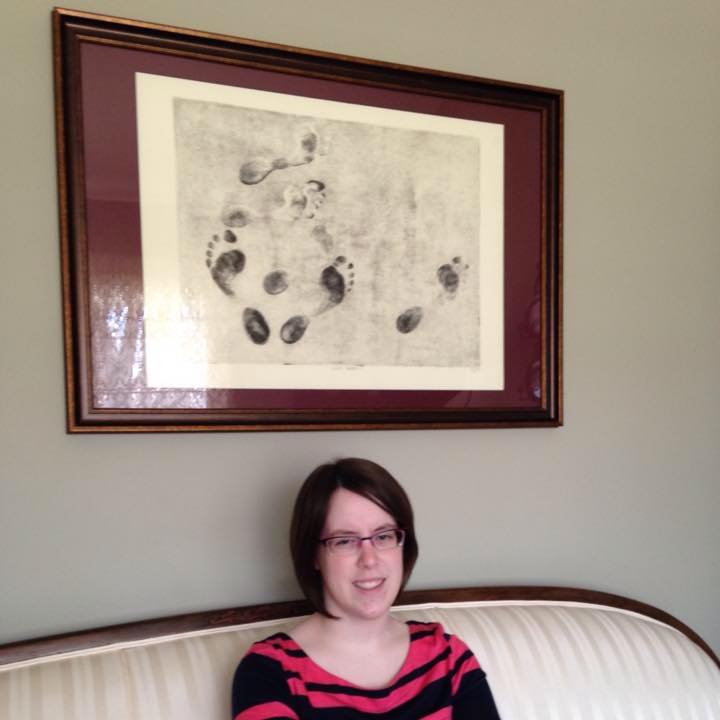
As a person, I’m pretty spontaneous but as an artist even more so. Ideas come to me without warning and usually I have the urge to begin on them right away. Since many of my pieces aren’t that thought out, I typically don’t know what a piece is about until I finish it. A lot of my work is inspired by music, dance, language, and culture, especially those of eastern Asia. Time and space also play a heavy role in my work as I’ve always had an interest in history and the ways in which we perceive and interpret space.
I have a B.A. in printmaking with a minor in painting from Drake University in Des Moines, Iowa.
Learn more about my art techniques below!
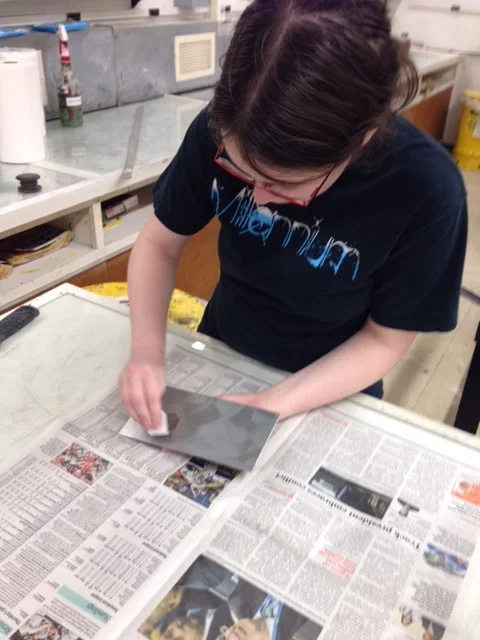
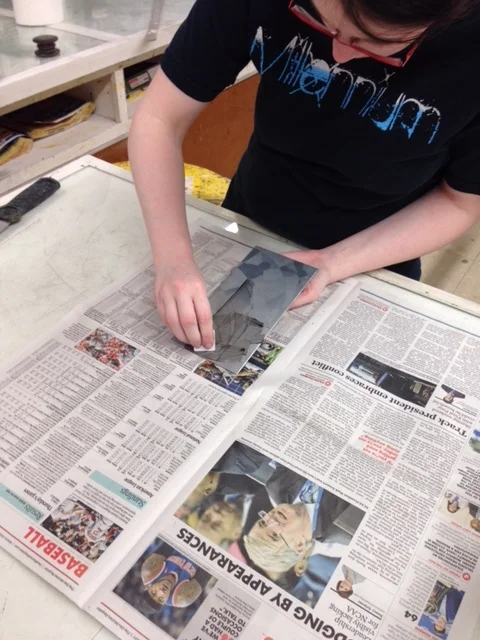
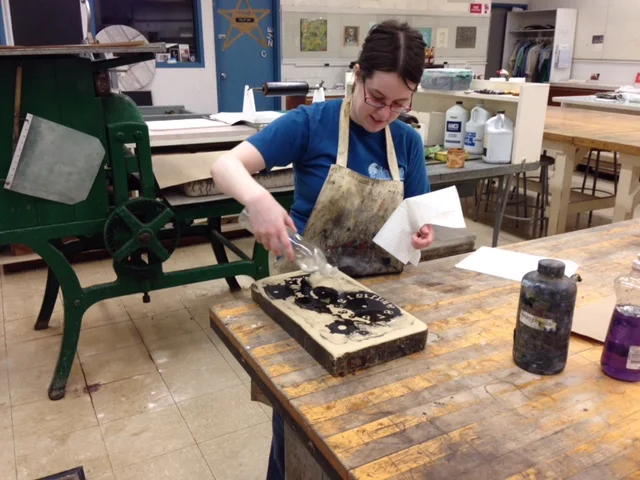
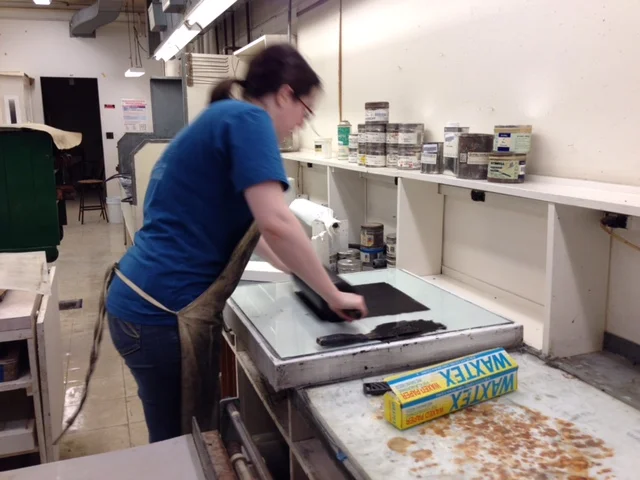
This is the third plate in Movements of Forgetfulness. The plate I use is made of zinc but originally plates were made of copper. Here I've started to put ink on the plate.
I continue to add ink to the plate with small squares of matte; pulling the ink into the lines on the plate.
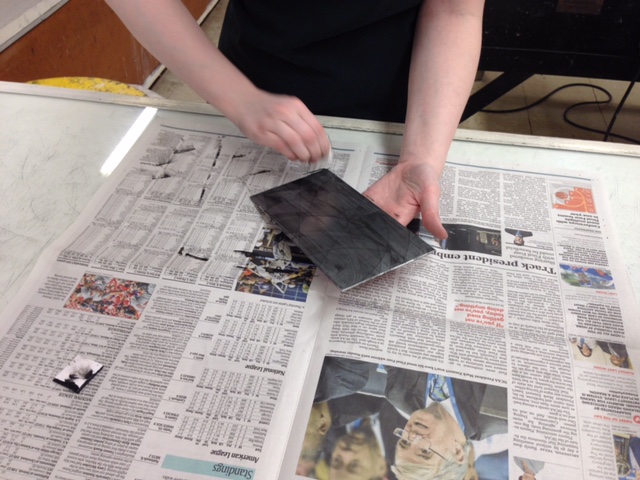
Once the entire plate has been covered in ink, I can begin to wipe off the excess ink which is causing the streaked black lines across the plate.
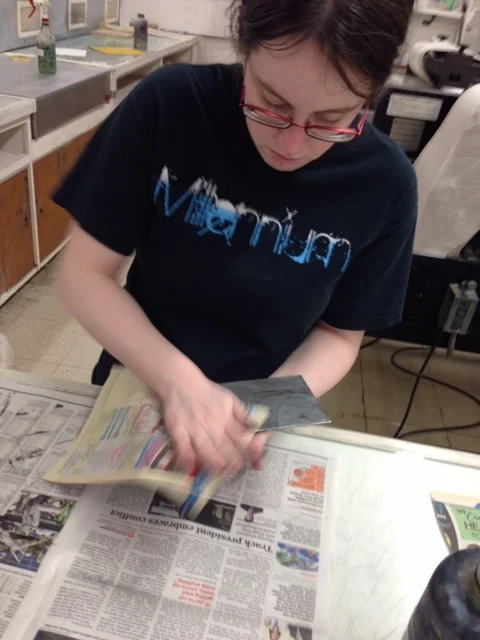
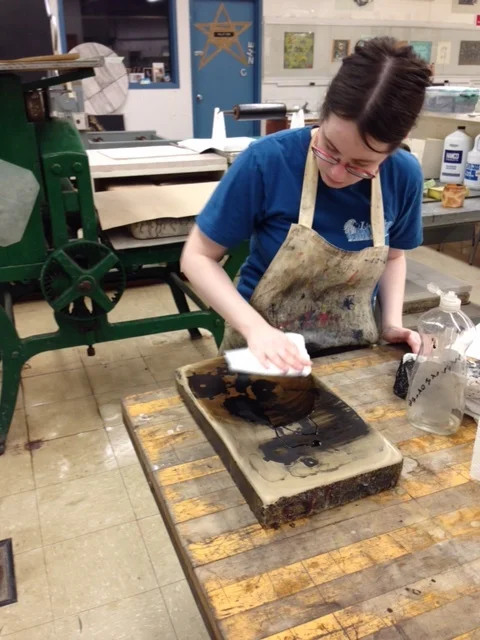
Now I take phonebook paper to wipe off the excess ink using light pressure with my palm. I make sure to clean the edges of the plate to ensure no extra ink ends up on the final print.
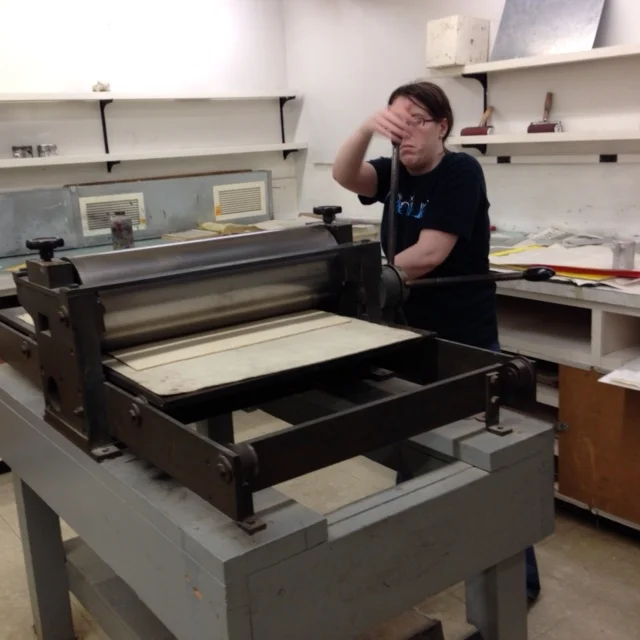
Here I've already laid the plate on the press, covering it with a damp piece of heavy paper to print. On top of that there are a few layers of newsprint to absorb the excess moisture from the damp paper. After laying down the felt cushions, I crank the levers to move the print through the press.
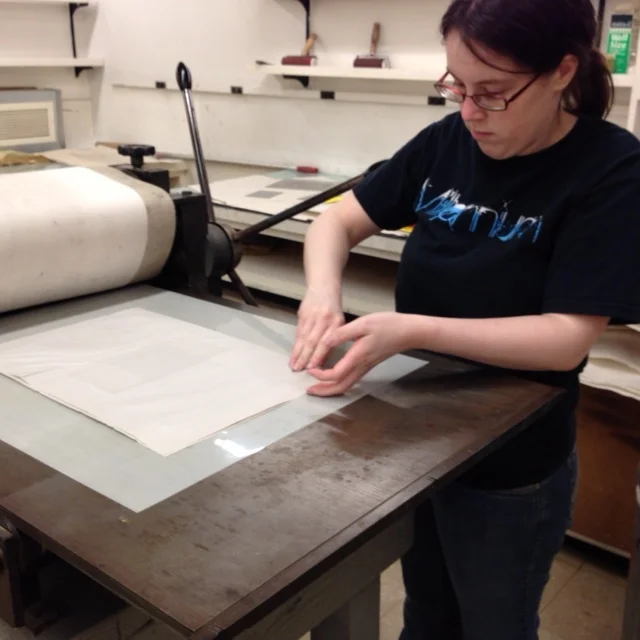
The print came out successfully! I use a reference piece of paper under the plastic to help line up the plate and paper so the print comes out the same every time.
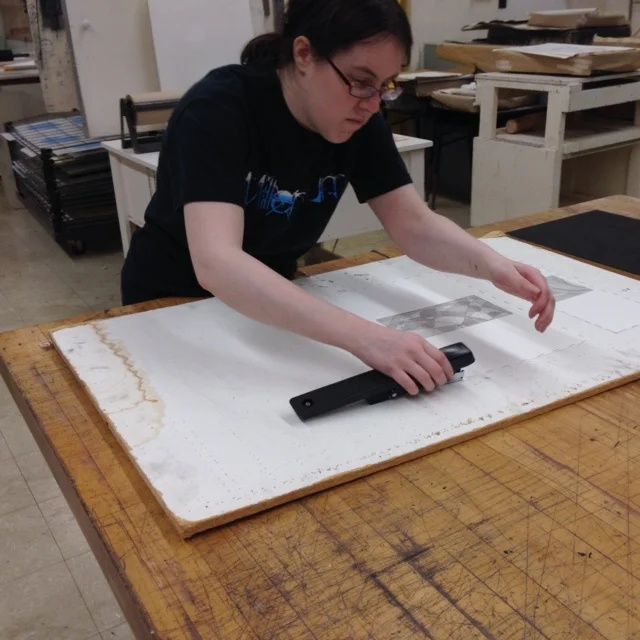
The second to last step is to staple the print to a flat surface to allow the print to dry completely flat. After the print is dry (I typically wait a day), I pull the print from the board and remove the staples. The last step is to trim the print down to the correct size.
This is the stone I use to print Gears of Time. It is Bavarian limestone, one of the best limestones for lithography. The reason why lithography works is based on the principal that water and grease/oil don't mix. All of the blacks and grays on the stone were made with oily materials that will attract and hold the greasy ink while the light areas will fill with water that will reject the greasy ink.
Before I can print the stone, the protective coating on the image has to be removed with solvent and a little elbow grease.
With the coating removed, the image needs to be revived with fresh grease. After fulling covering the stone, I use a handheld fan to dry the grease.
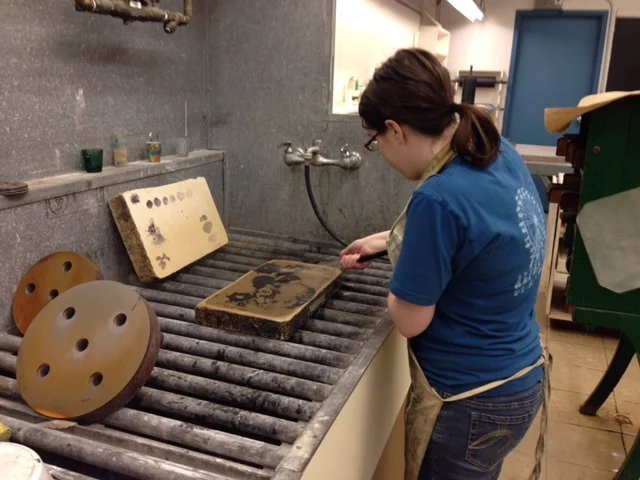
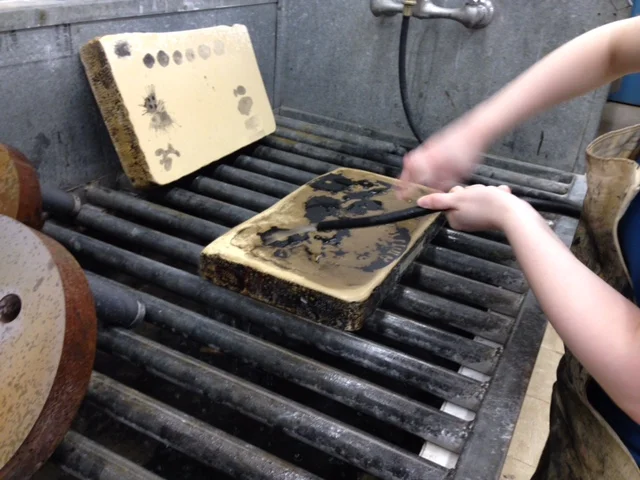
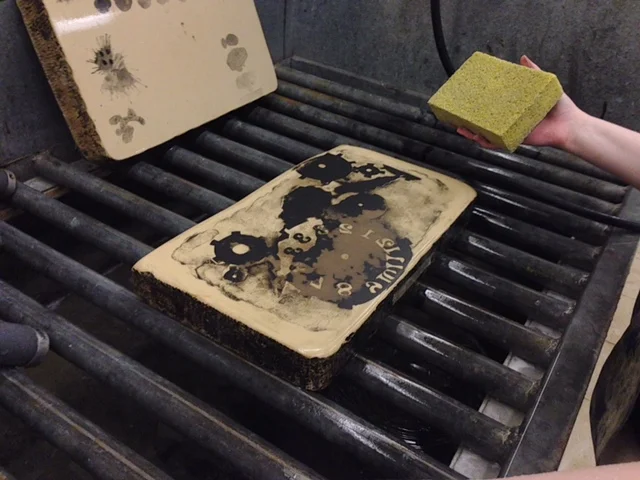
Here I use a hose to force a water jet to remove the excess grease from the stone, leaving only the black marks coated with grease. The giant wheels to the side are used to grind old images off of lithography stones so that they can be reused. It is possible to still find stones with images from the 1800's that can be printed if they were stored properly.
Now that all the excess grease has been removed, the stone must be kept damp to keep the balance of water/oil.
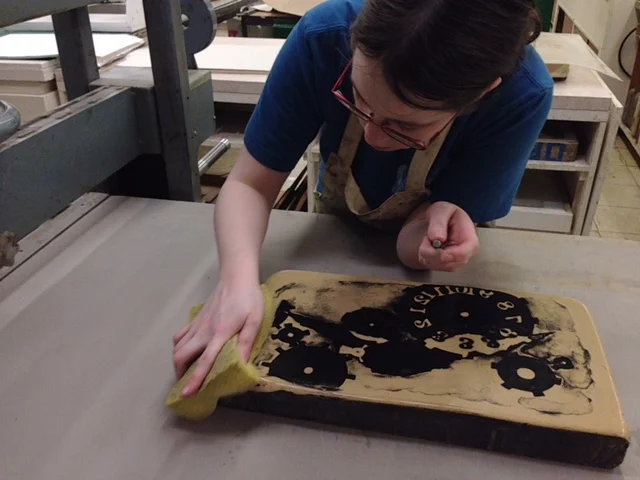
In between rolling on the ink, I sponge the stone to keep it damp. If any area of stone dries out, the next roll of ink will stick to the area no longer being protected by water.
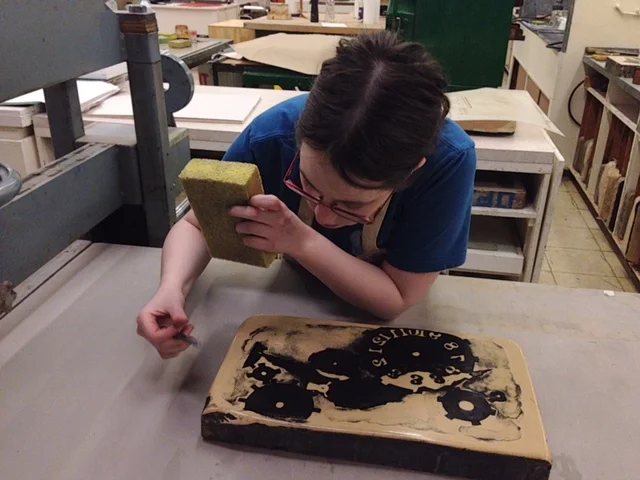
Since the edges of the stone dry out faster than the middle, it is common to have some ink buildup on the sides. This must be removed before printing or it can ruin the print with messy black edges. I use a special chalk-like stick to remove the ink.
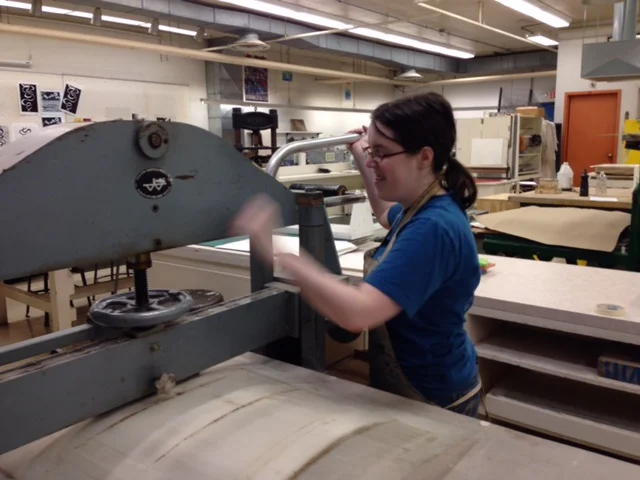
After aligning the print paper over the stone, I cover it with newsprint and the protective plastic covering. The press bar is greased so that the stone can still be moved through the press once the pressure has been set. Setting the pressure too high can actually break a stone but setting the pressure too low will result in a faint print.